By Ugur Unal, Business Development Manager, Vanguard Engineering
By Ugur Unal, Business Development Manager, Vanguard Engineering
In almost every terminal conversation I have, choosing between a pneumatic or mechanical ship unloader gets framed as a technology preference. It isn’t. It’s a function of three numbers: vessel size, conveying distance, and what happens to the material after it leaves the ship. Get those three right, and the equipment choice makes itself.
This is the same decision tree I walk terminal operators and EPC contractors through — not a sales pitch, just the logic I use before ever suggesting a specific machine.
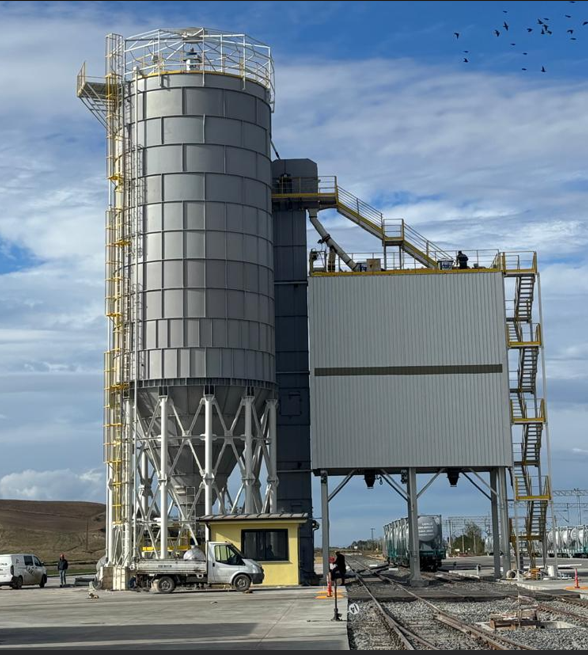
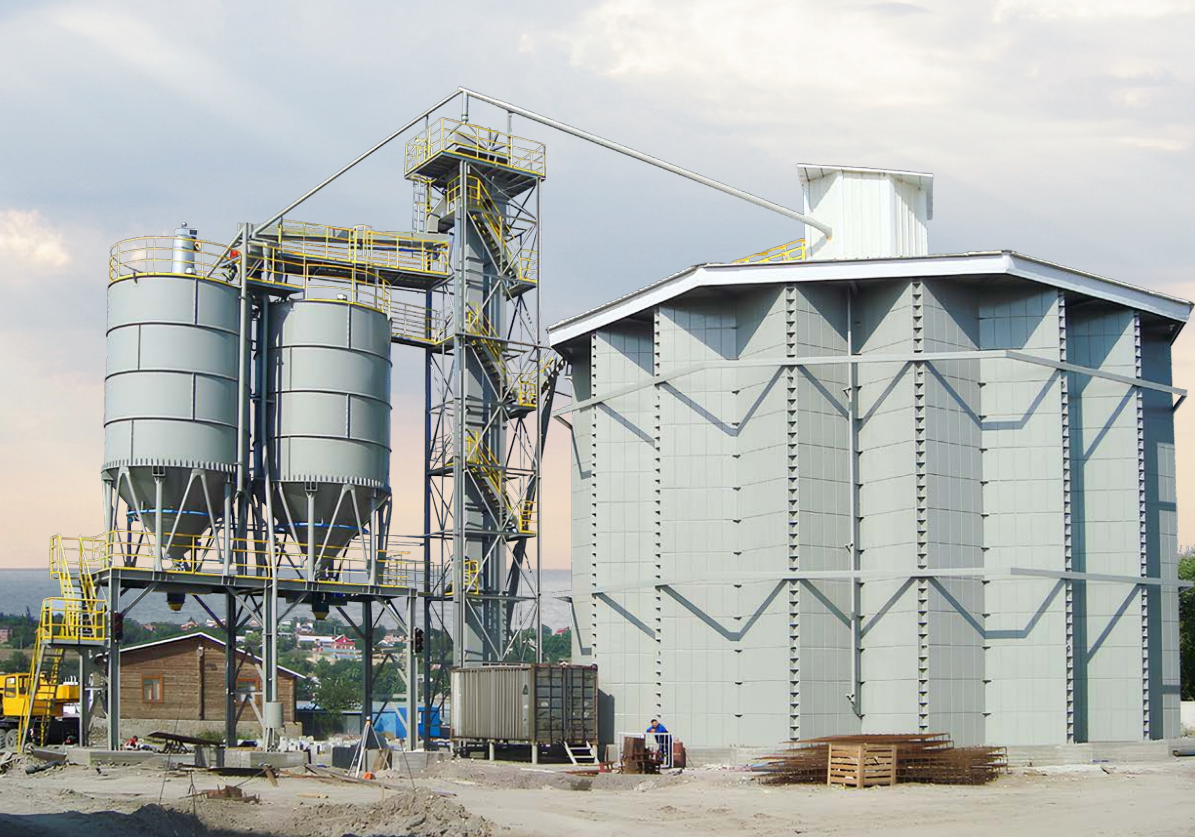
Most conversations start with the vessel — “we’re getting 15,000 dwt carriers” — and jump straight to unloading rate. But the more useful starting question is where the material goes next. Is it feeding a silo 300 meters back from the quay? Or is it going straight into silobas trucks parked dockside for immediate distribution?
That single question splits the equipment decision more decisively than vessel size does, because it determines whether you need reach or you need throughput-per-truck-cycle.
Pneumatic systems solve a specific problem: getting bulk material a long horizontal or vertical distance from the ship’s hold to a storage point, without a mechanical conveyor run across the quay.
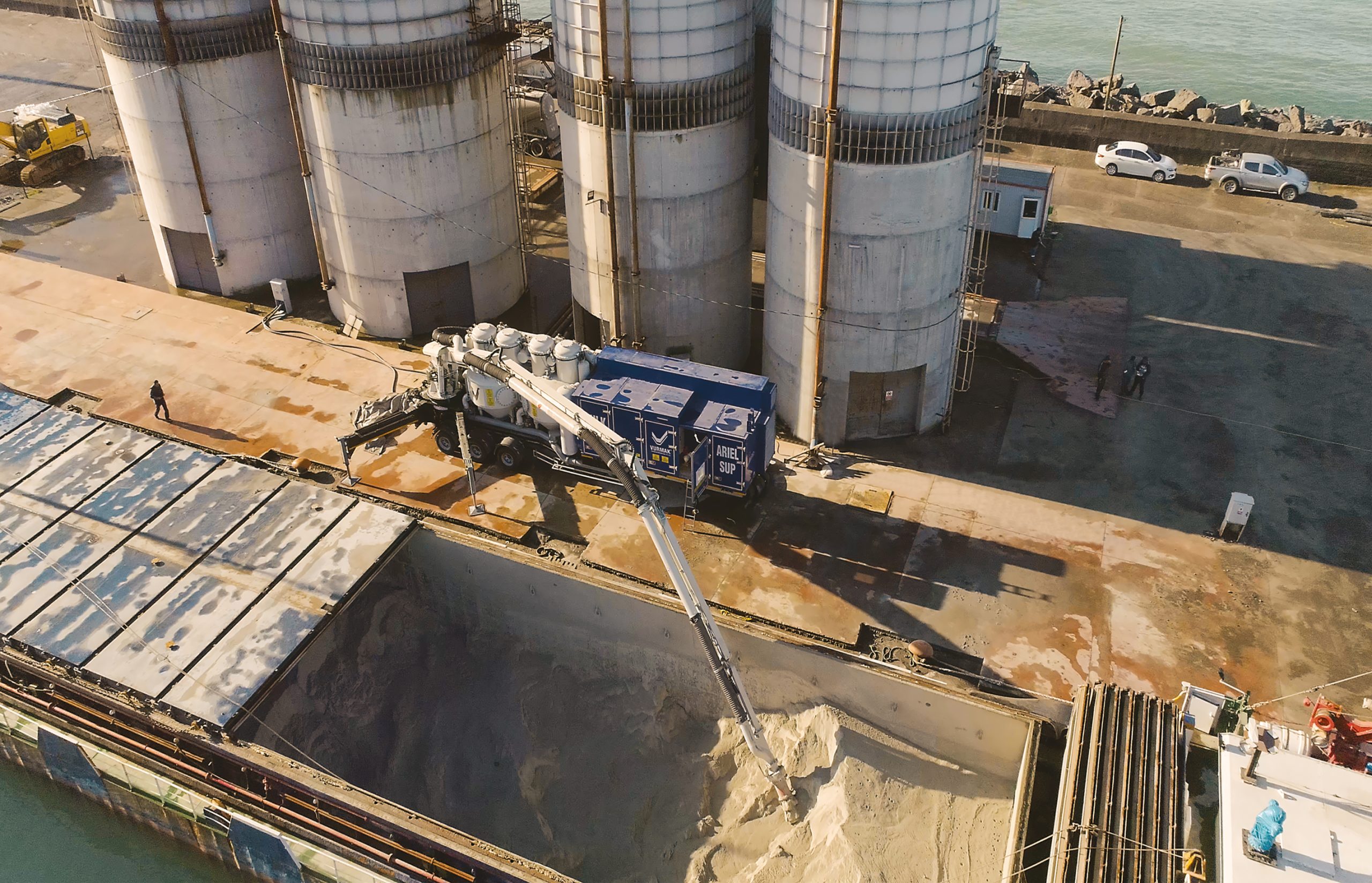
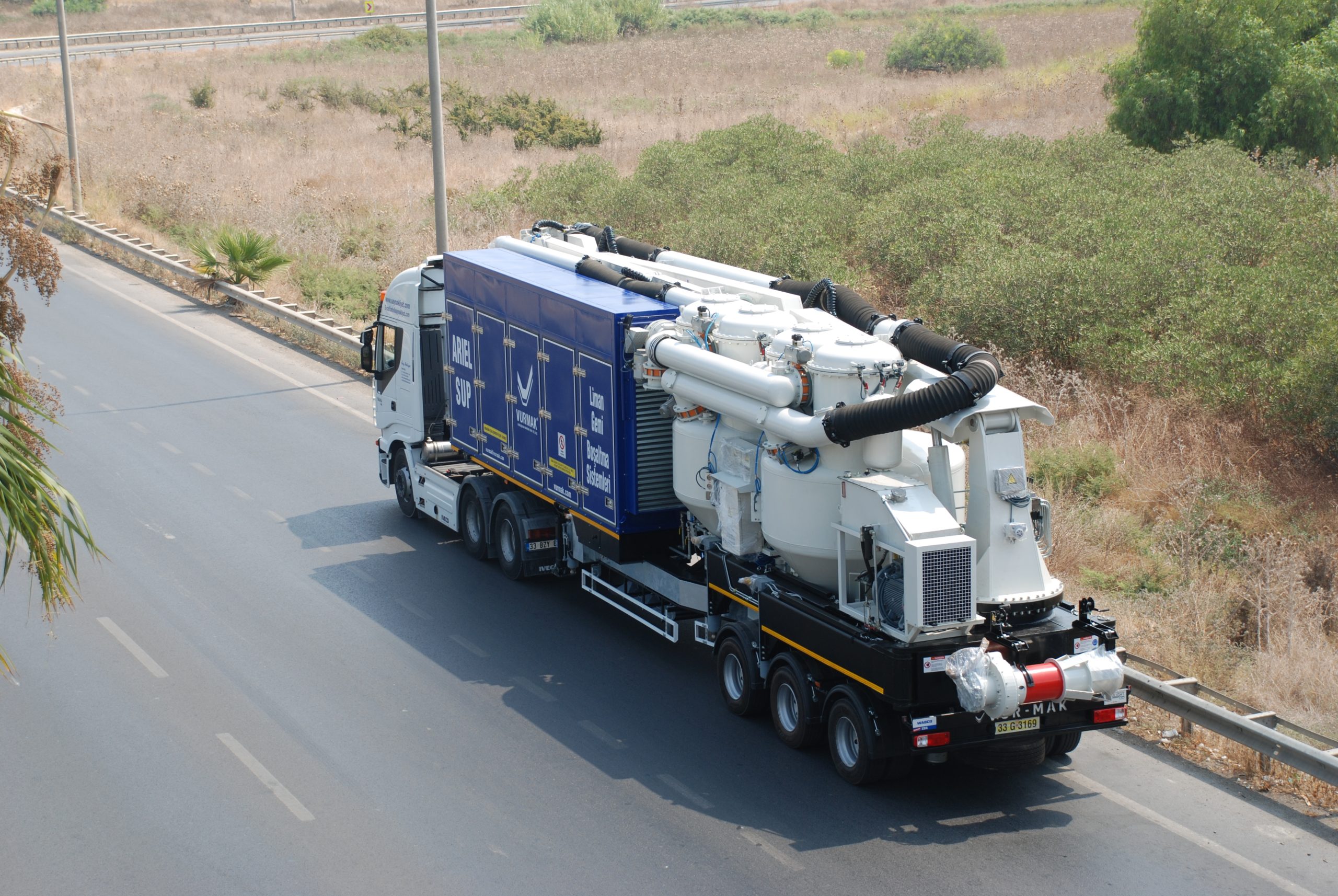
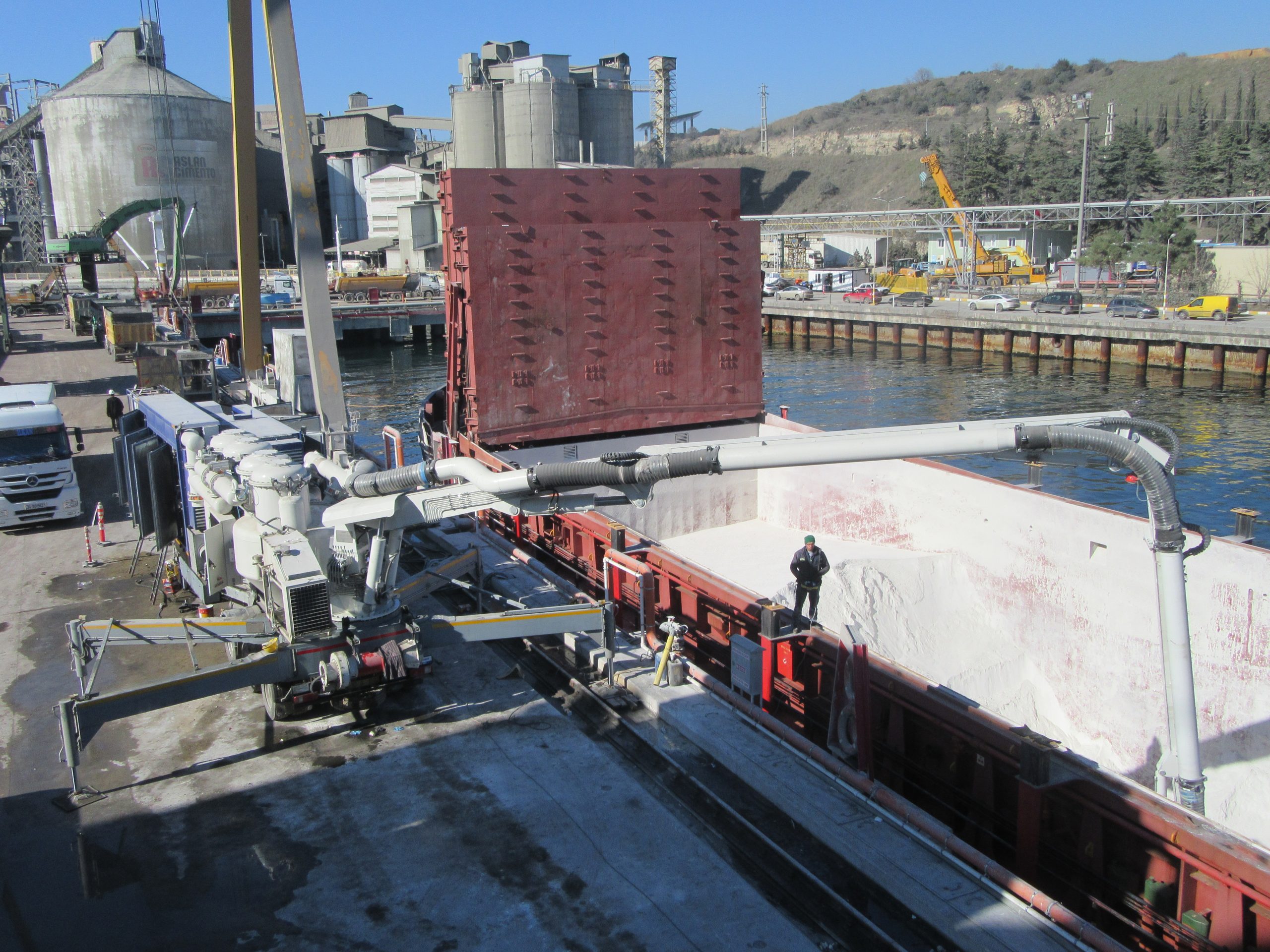
Our ARIEL dock-mobile pneumatic unloader is built around that exact constraint. It handles vessels up to 20,000 dwt and conveys material up to 350 meters — which matters when your storage silos aren’t sitting right on the berth, or when quay geometry doesn’t allow a fixed mechanical conveyor line. Depending on distance and material characteristics, throughput runs up to 300 tph.
The engineering trade-off is straightforward: vacuum suction means no material contact with mechanical conveying surfaces (lower spillage, tighter dust control at the transfer points), but the system is inherently rate-limited by suction distance and kettle cycle time — the further you push the material, the more the pressure-differential physics work against you. This is why pneumatic systems are the right call when reach matters more than raw peak tonnage, and why terminals with distant storage almost always end up here regardless of vessel size.
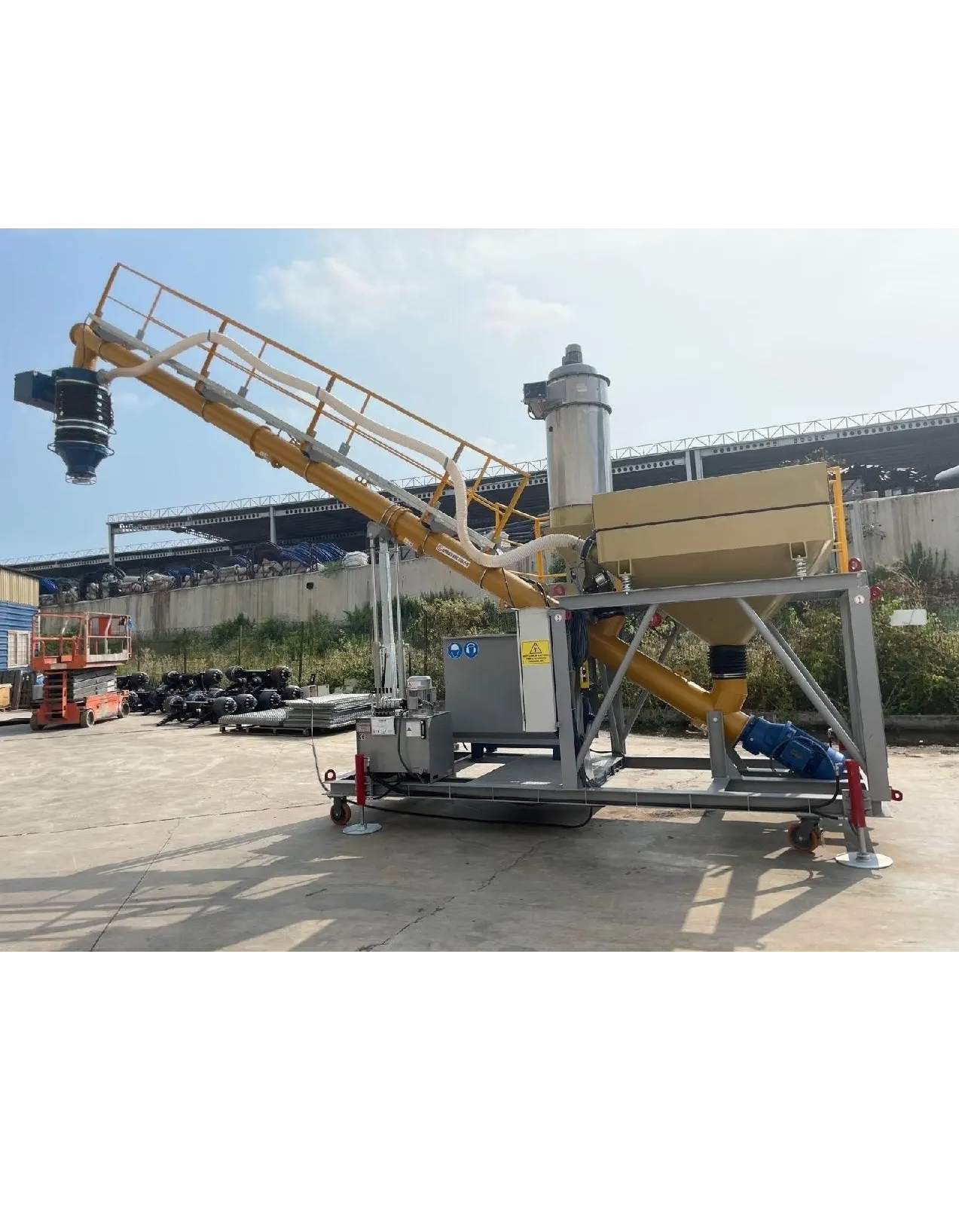
Mechanical unloading solves a different problem: moving material fast, directly into a mobile receiving point — usually a truck or silobas — without the pressure-cycle overhead of a pneumatic kettle system.
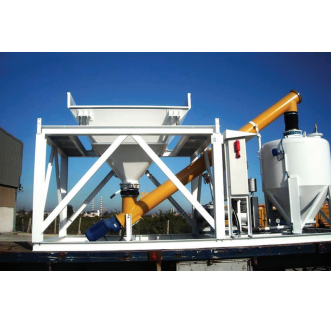
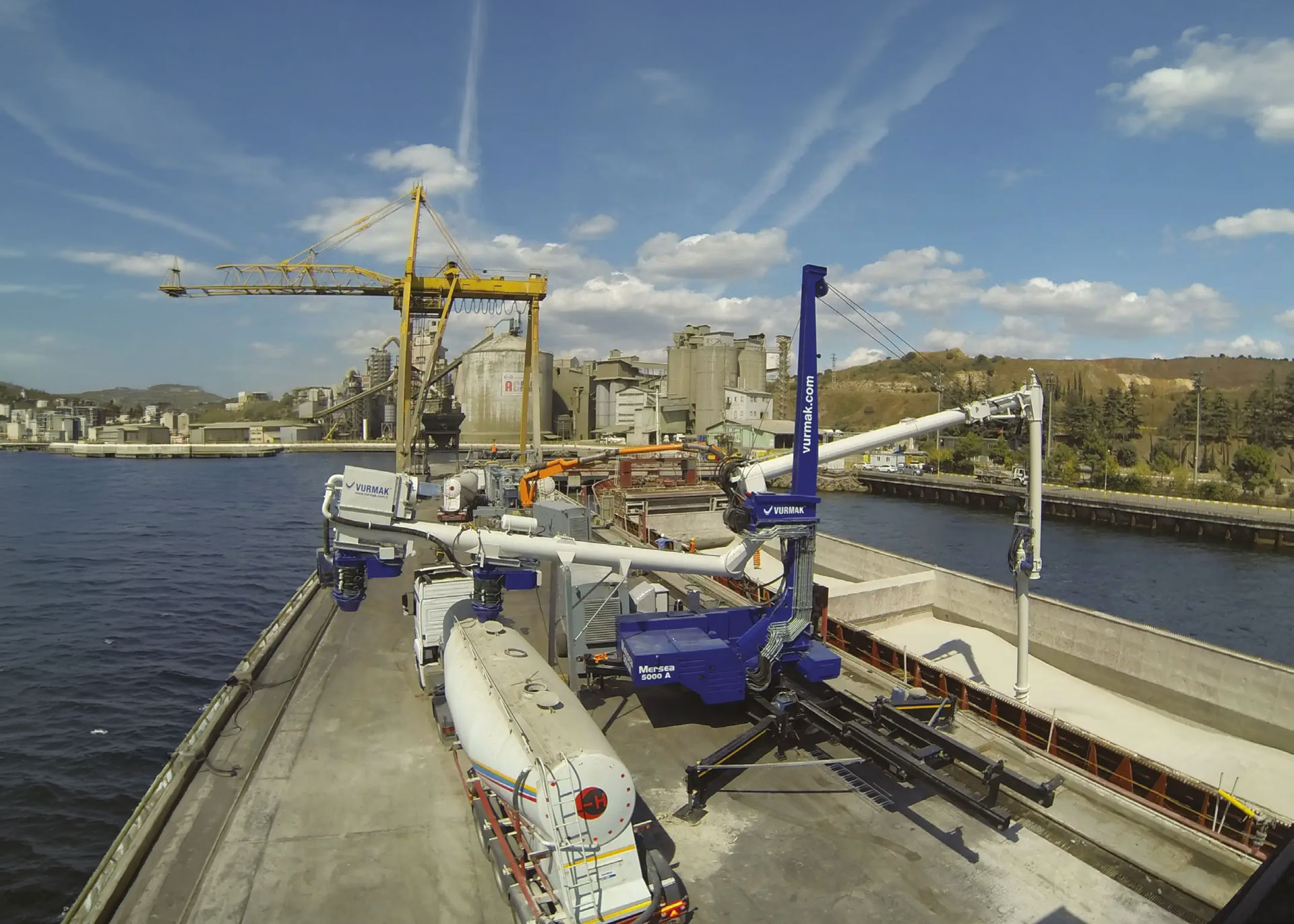
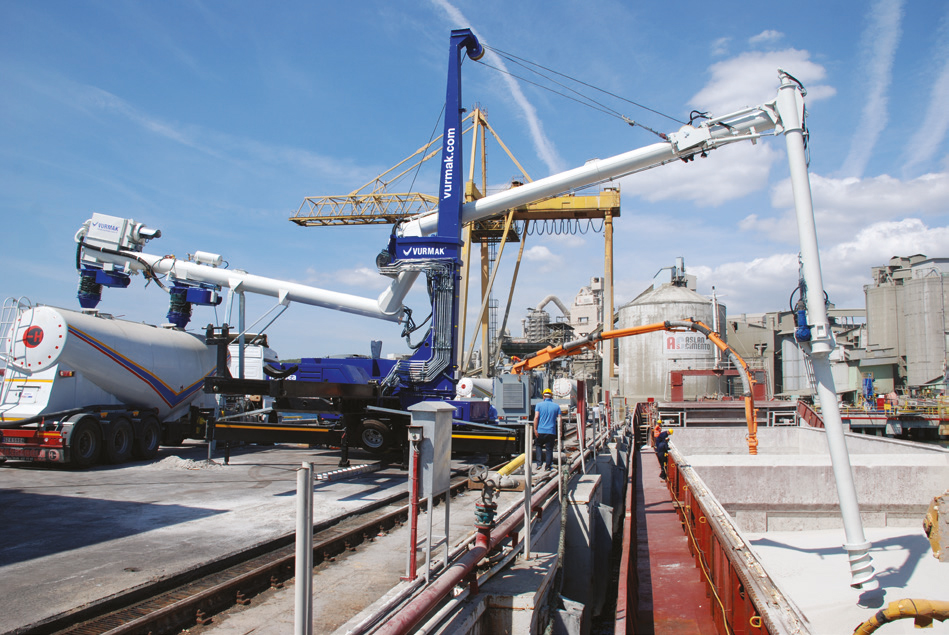
Our MERSEA road-mobile mechanical unloader is built for exactly that use case. It’s designed for vessels in the 5,000–10,000 dwt range, uses screw conveyors to move material to two independent filling bellows, and delivers up to 300 tph directly into silobas trucks. Because the whole unit transports as a single piece with no on-site assembly, it also solves a logistics problem pneumatic systems don’t address at all: redeployment. A terminal running seasonal or irregular vessel traffic can move a MERSEA unit to wherever the next call happens, without a fixed installation footprint.
The trade-off here is the mirror image of pneumatic: mechanical conveying gives you consistent, high throughput per truck cycle and doesn’t degrade with distance the way suction does — but it needs a mechanical footprint (screw conveyor runs, bellow positioning) and the transfer points require their own dust and spillage controls, since the material is in direct mechanical contact rather than sealed inside a vacuum line.
Terminals that get this wrong usually aren’t buying the “wrong” equipment in isolation — they’re solving for vessel size when the actual constraint was distance, or solving for throughput when the actual constraint was redeployability. A few questions I’d ask before specifying anything:
None of these questions have a universally correct answer. They have a correct answer for your terminal’s geometry, your vessel mix, and your downstream logistics. If that’s the conversation you’re at, let’s have it — bring me your vessel mix and berth layout, and we’ll figure out which machine actually fits.
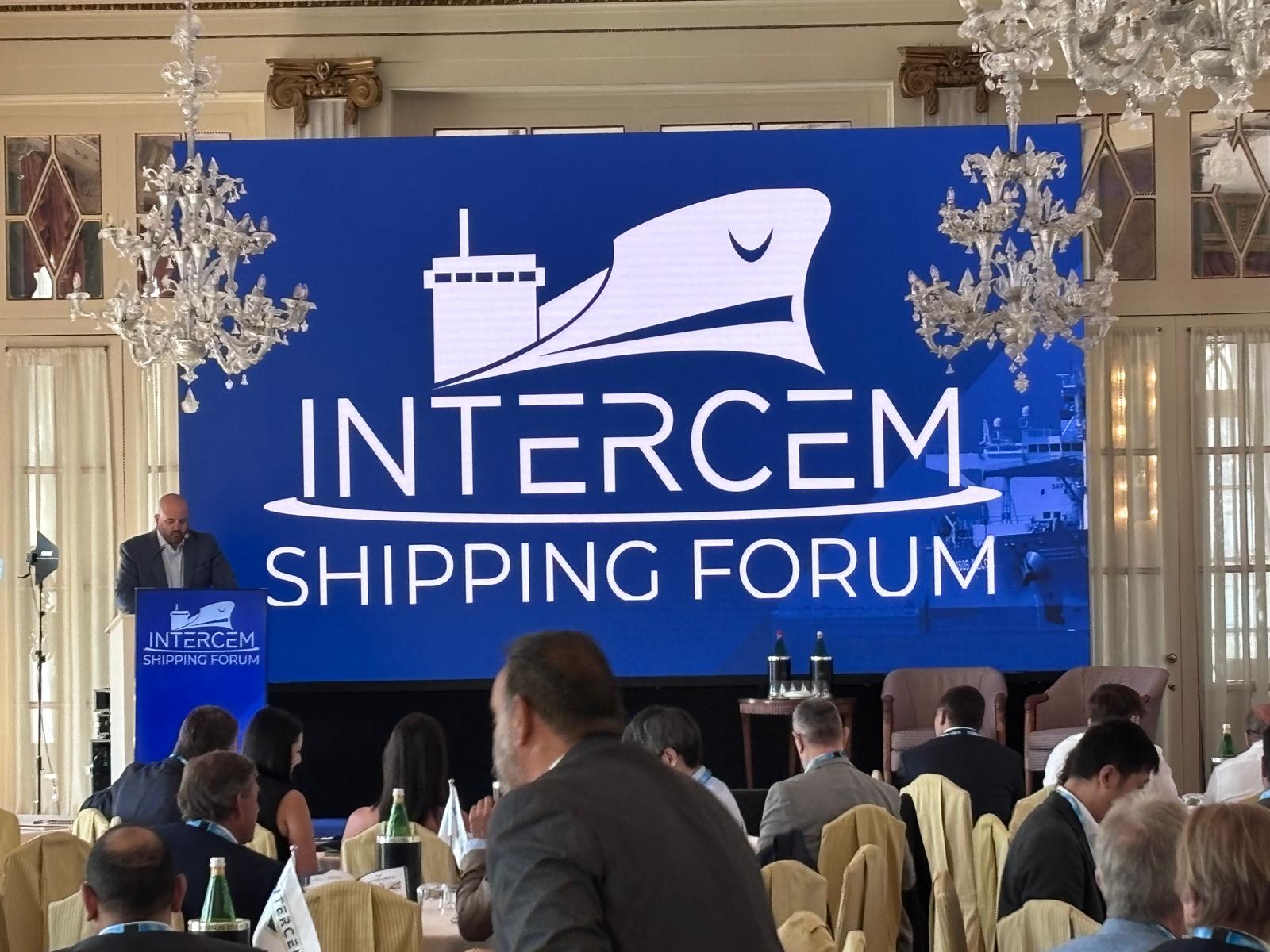
Vanguard Engineering Participated in the INTERCEM Shipping Forum 2026 On June 7, 2026, Vanguard Engineering participated in the INTERCEM Shipping Forum 2026 held in Naples, Italy. As global dry bulk logistics and shipping dynamics continued to evolve, Vanguard Engineering stood alongside industry leaders to present our advanced engineering solutions and mobile ship unloading technologies. During […]