By Ugur Unal, Business Development Manager, Vanguard Engineering
By Ugur Unal, Business Development Manager, Vanguard Engineering
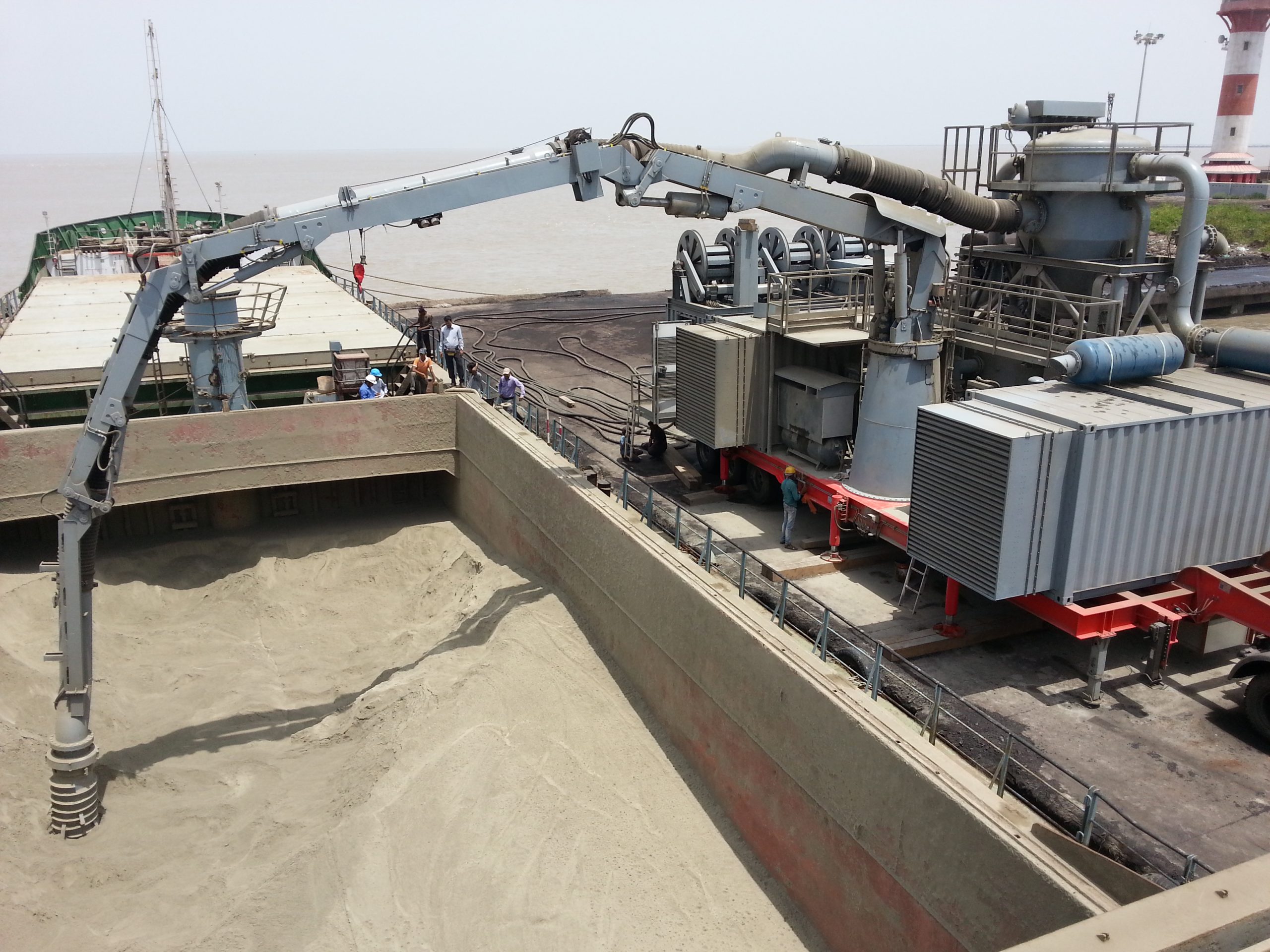
A question I get almost as often as “pneumatic or mechanical” is a narrower one: within pneumatic unloading, should a terminal go dock-mobile or road-mobile? The instinct is to assume more mobility has to be better. That instinct is wrong often enough to be worth correcting. Choosing between dock-mobile vs. road-mobile ship unloaders comes down to three factors: the discharge rate the terminal needs, the conveying distance from berth to storage, and how often the unloader has to move.
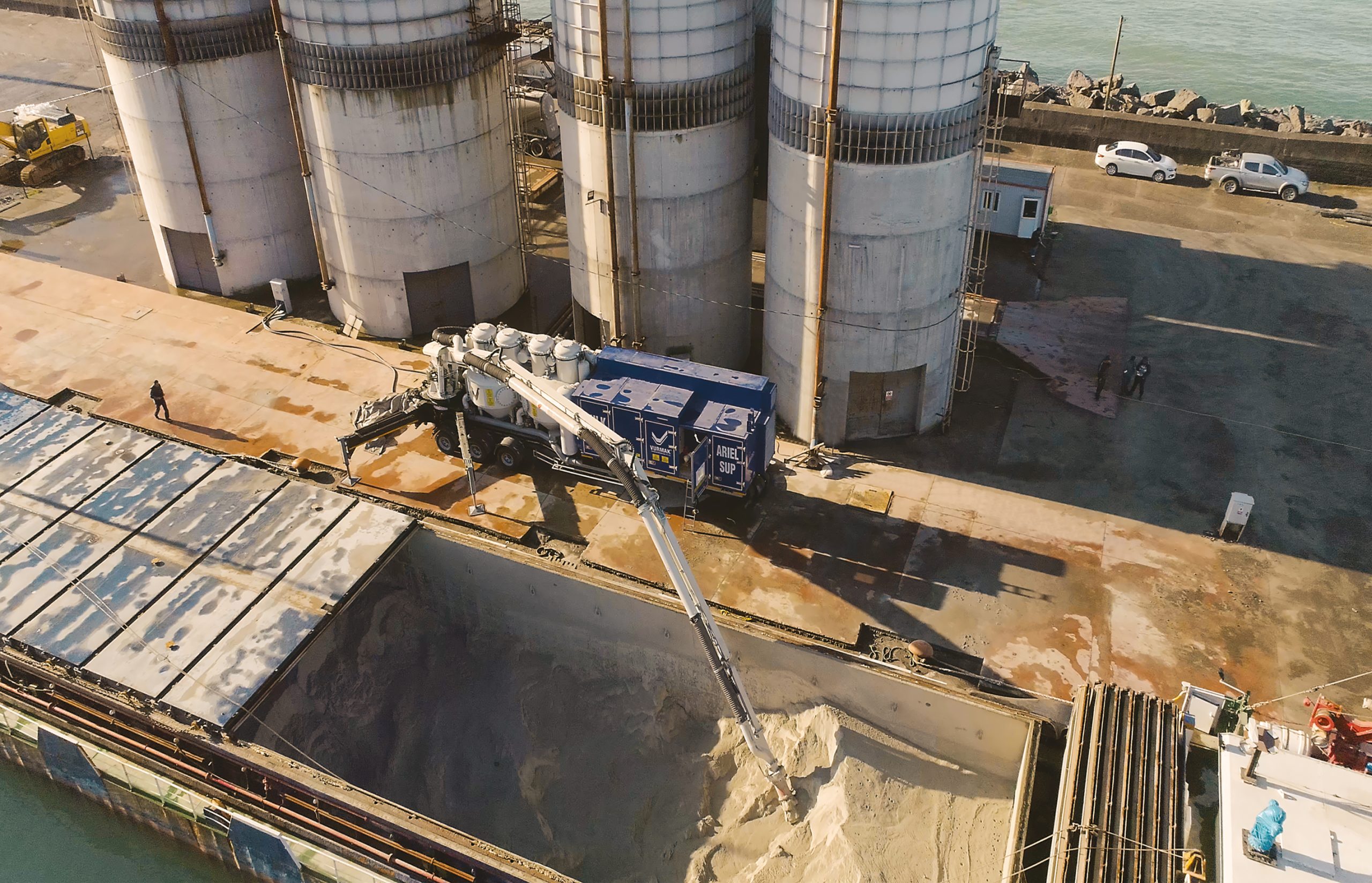
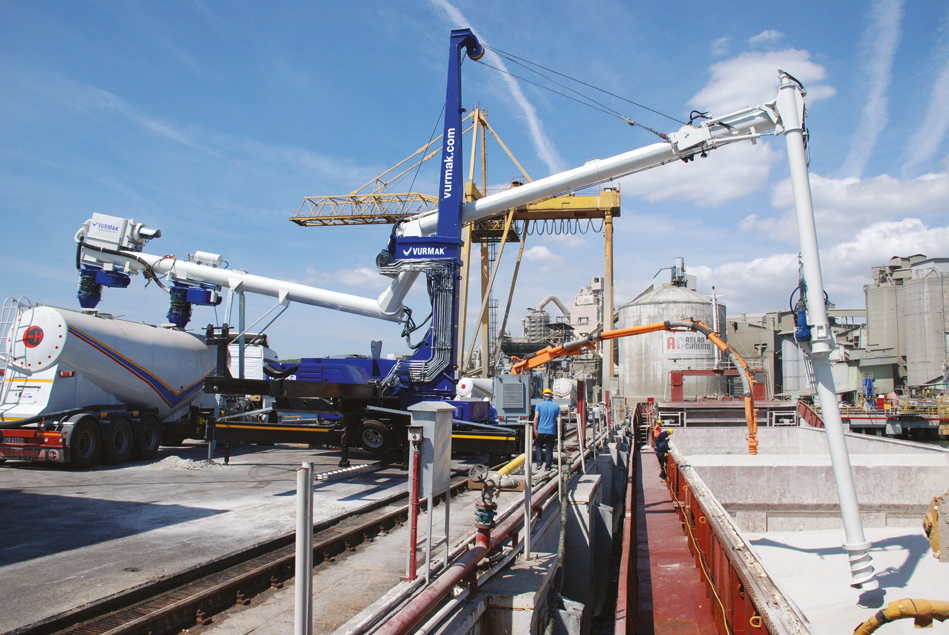
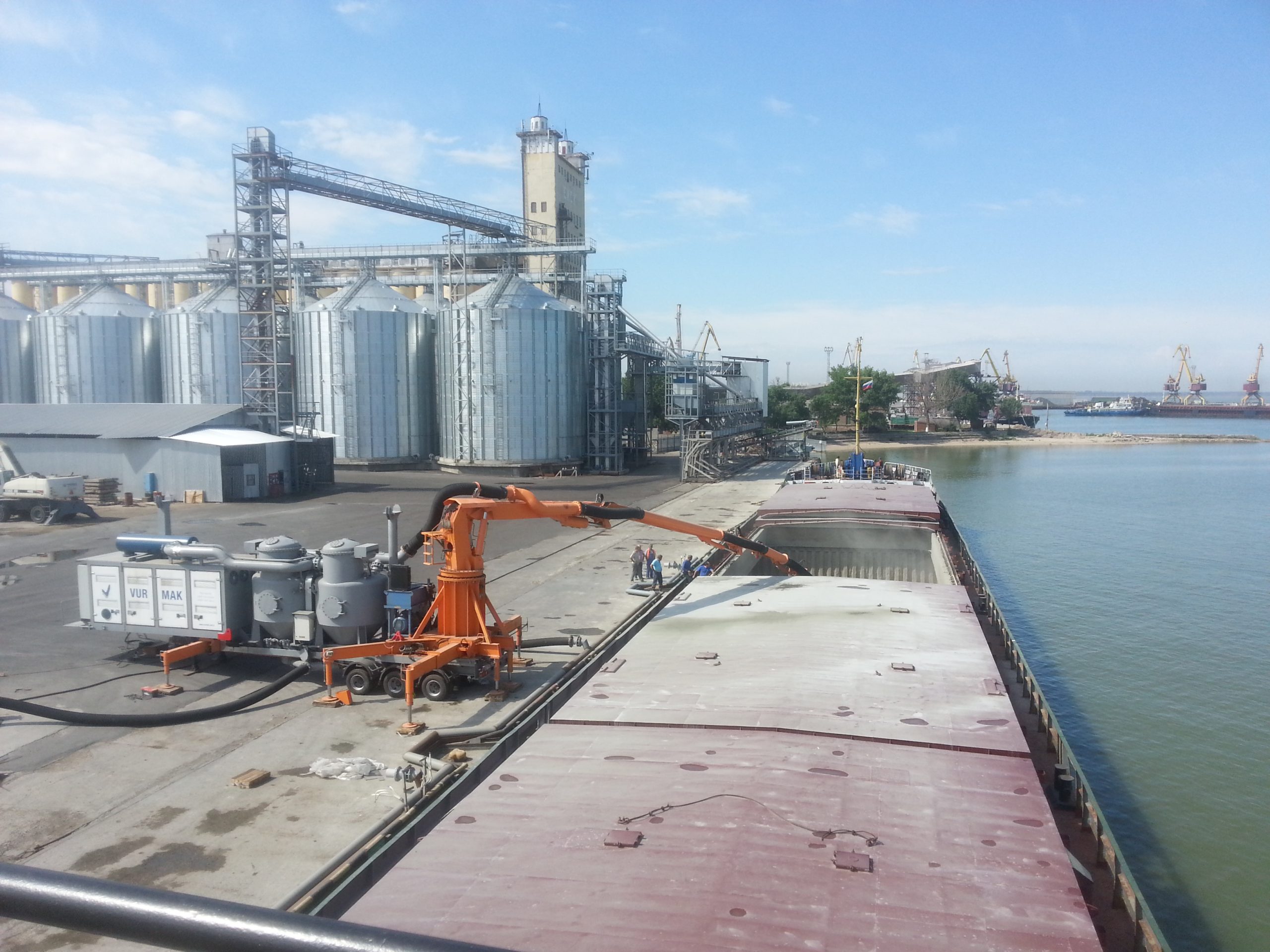
The two terms describe genuinely different kinds of mobility, and mixing them up leads to the wrong equipment. A road-mobile unit is built to move between ports: it travels on the back of a truck, arrives as a single piece, and needs no site-specific installation. In practice that means it can be working within hours of arriving, with no foundations, no rails, and no civil works to budget for. A dock-mobile unit is mobile within a terminal: it can reposition along a quay to serve different berths, but it isn’t something you hitch up and drive to another port next month. It’s typically designed and built around the specifics of that one site.
Both versions are pneumatic and both work on the same principle. What separates them is how much conveying equipment you can put on a chassis that still has to travel on public roads.
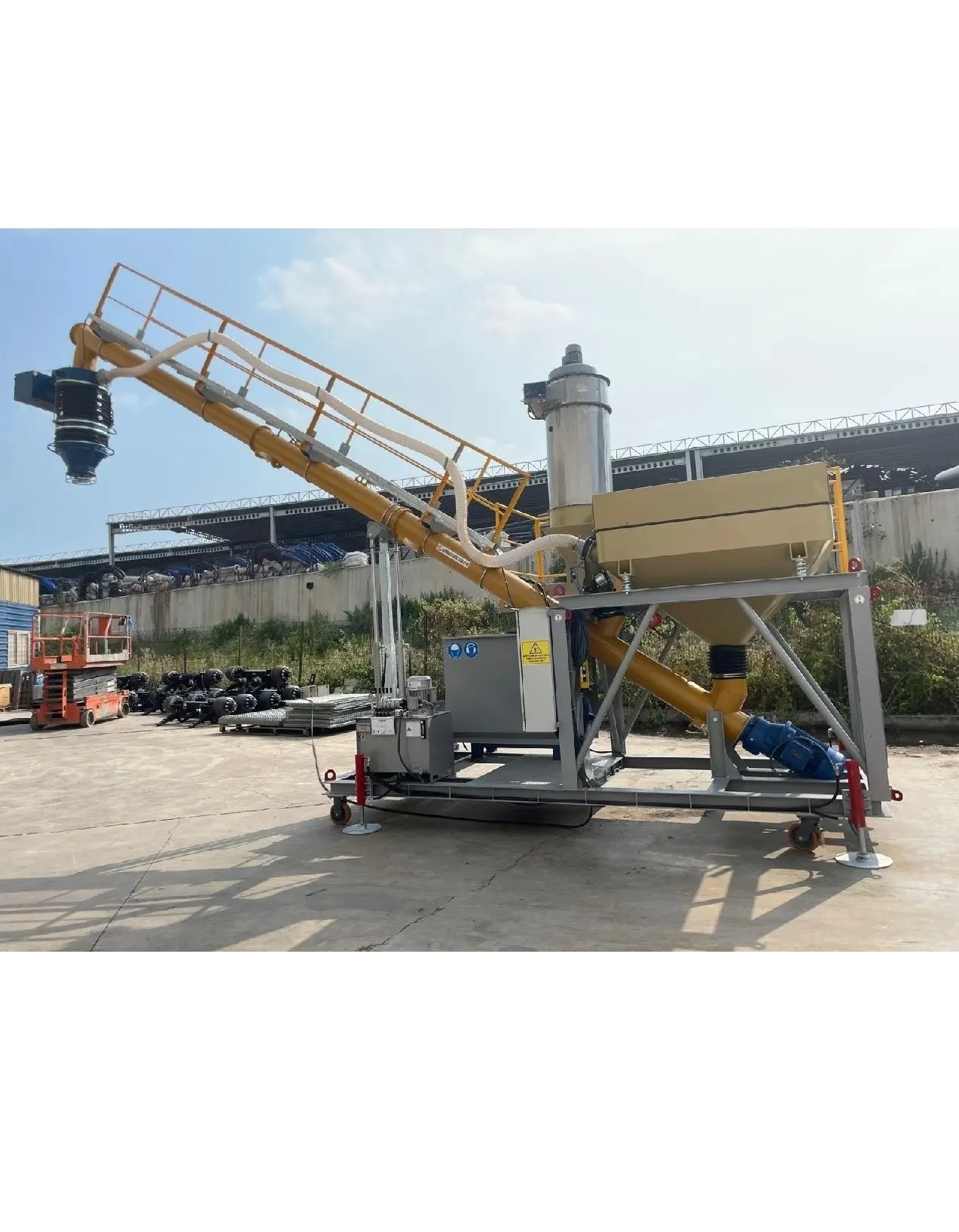
The road-mobile ARIEL carries one blower and one compressor: 185 tph, up to 250 meters of conveying, vessels up to 8,000 dwt. The semi-road-mobile version is the same conveying package on a larger frame, rated for vessels up to 15,000 dwt. Both travel to the berth behind a standard truck.
The dock-mobile ARIEL doubles that package: 300 tph, up to 350 meters, vessels from 20,000 to 30,000 dwt. The extra capacity is also the reason it stays at the terminal. More conveying power and reach mean more structure, and more structure means it stops being road-transportable.Larger configurations are engineered on request.
So vessel size is the symptom, not the cause. A 25,000 dwt carrier needs a dock-mobile unit not because of its tonnage but because discharging it in a reasonable number of days takes 300 tph. Berth geometry pushes you the same way: if storage sits 300 meters back from the quay, that alone rules out the road-mobile unit, whatever the vessel size.
If a company serves several smaller ports or terminals with irregular vessel calls, none of them individually generating enough volume to justify a dedicated unit of its own, a road-mobile unit wins even though a dock-mobile unit could theoretically unload any single vessel faster. The unit earns its cost by staying busy across multiple sites instead of sitting idle at one. Utilization, not peak rate, is what decides the case here.
If a company runs one terminal that regularly receives larger vessels on a predictable schedule, a dock-mobile unit fully utilized at that site outperforms rotating a smaller road-mobile unit through it. The capacity is there when it’s needed, and it’s designed around that specific berth from the start.
Underpowered choice: specifying a road-mobile unit for a terminal that regularly takes vessels above 15,000 dwt, or that needs more than 250 meters of conveying. The vessel sits at the berth longer than it should, and whatever cost advantage the shipping side gained by chartering a larger carrier gets partly erased in demurrage at the quay.
Overbuilt choice: installing a dock-mobile unit at a site with irregular, low-volume calls ties up capital in a unit that sits idle much of the year, when a road-mobile unit could have served that same volume, and other sites besides, for less.
Both mistakes are expensive, but in opposite directions, and only the call pattern tells you which one you’re closer to.
If you’re weighing this for a specific terminal, bring me your typical vessel size range and how often you actually receive calls, and we’ll work out which setup earns its cost.


Over the past three days at Swissotel The Bosphorus, the Vanguard Engineering team had the privilege of connecting with cement producers, traders, and logistics experts from over 50 countries. We had engaging discussions around the future of dry bulk handling, sustainable logistics, and our mobile ship unloading technologies. A huge thank you to everyone who […]
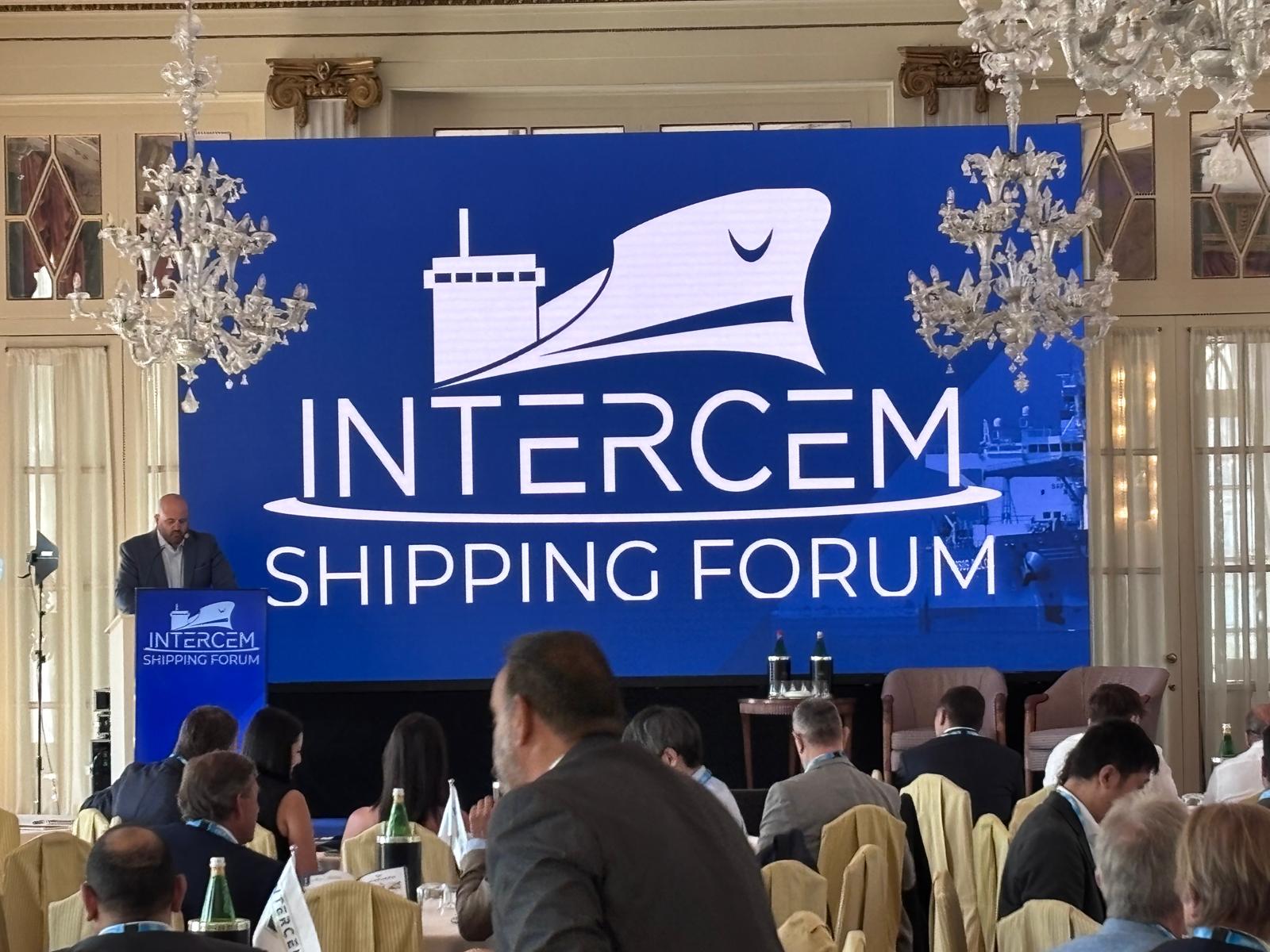
Vanguard Engineering Participated in the INTERCEM Shipping Forum 2026 On June 7, 2026, Vanguard Engineering participated in the INTERCEM Shipping Forum 2026 held in Naples, Italy. As global dry bulk logistics and shipping dynamics continued to evolve, Vanguard Engineering stood alongside industry leaders to present our advanced engineering solutions and mobile ship unloading technologies. During […]